Category: HDD Operations

  • Why Bore Log Mistakes Cost Contractors Money

    Why Bore Log Mistakes Cost Contractors Money

    Crews don’t lose money because they can’t drill. They lose money because they can’t prove what they drilled.

    That difference is everything.

    Directional drilling is one of the few trades where the most important part of the job is the part nobody can see. The entire operation happens underground, out of sight, out of reach, and out of the GC’s understanding.

    And when work is invisible, documentation becomes the only evidence that work was done correctly.

    That’s why bore log mistakes are so expensive.

    They don’t show up while you’re drilling. They don’t show up when the crew is packing up. They don’t show up when the inspector signs off.

    They show up later, when the job is being closed out and the money is on the line.

    This is where the problems hit:

    • Billing gets questioned
    • Footage totals don’t match
    • Production looks inconsistent
    • Change orders get denied
    • Delays can’t be justified
    • GCs push back on invoices
    • Cities ask for proof you don’t have

    And once you’re in that position, you’re not negotiating from strength. You’re defending yourself with weak documentation.

    A bore log mistake is not a paperwork mistake. It’s a financial mistake.

    It’s the difference between:

    • Getting paid in full
    • Getting paid late
    • Getting paid less
    • Or not getting paid at all

    The crews don’t feel this immediately. The contractor feels it weeks later, when the GC starts asking questions and the only thing you have to stand on is the log your crew filled out.

    That’s why this article matters.

    Because every mistake in a bore log becomes a weakness in your billing. And every weakness in your billing becomes leverage for someone else.

    This section sets the tone: If you want to protect your money, you must eliminate these mistakes.

    Mistake 1: Filling It Out at the End of the Day

    This is the most common bore log mistake in the industry and the most expensive.

    Crews think they’re being efficient by “just filling it out later.” They think they’ll remember the details. They think the day was simple enough to reconstruct.

    But directional drilling is not simple. And memory is not documentation.

    When you fill out a bore log at the end of the day, you’re not recording what happened, you’re reconstructing a story from fragments.

    Here’s what actually happens when crews wait:

    1. Shots blend together

    Every shot feels the same when you’re tired. You forget which one had the steering correction. You forget which one hit wet ground. You forget which one slowed down.

    Now your log is vague. Vague logs get questioned.

    2. Problems get forgotten

    Crews don’t forget the big problems. They forget the small ones, the ones that matter.

    • The 12‑minute steering correction
    • The unexpected clay pocket
    • The rod that bound up
    • The locator swap
    • The slow returns
    • The utility that forced a depth change

    These are the details that justify production changes. When they’re missing, your numbers look inconsistent.

    Inconsistent numbers get challenged.

    3. Times get rounded

    Nobody remembers exact start and stop times eight hours later. So crews guess.

    Guessing turns into rounding. Rounding turns into inaccuracy. Inaccuracy turns into doubt.

    And doubt is the enemy of billing.

    4. Conditions get oversimplified

    When you log later, you write whatever you think the ground was like.

    But conditions change shot to shot:

    • Dry to wet
    • Sand to clay
    • Clay to rock
    • Clean to mixed

    Those changes explain production. Without them, your footage looks slow for no reason.

    Slow for no reason looks like a crew problem, not a ground problem.

    5. The log becomes a story, not a record

    A bore log filled out at the end of the day is not a log. It’s a narrative.

    And narratives fall apart under pressure.

    When a GC, inspector, or PM asks:

    • “Why did production drop here?”
    • “Why did depth change?”
    • “Why did this shot take longer?”

    You won’t have an answer, because the log doesn’t have the answer.

    6. You lose your defense before the fight even starts

    The bore log is your shield. It protects your billing, your footage, your decisions, and your production.

    But a log filled out at the end of the day is a shield full of holes.

    When the GC pushes back, you have nothing solid to stand on.

    And once you’re defending yourself with weak documentation, you’ve already lost leverage.

    The Real Cost of This Mistake

    This mistake doesn’t cost you money today. It costs you money weeks later when:

    • Your footage totals don’t match
    • Your delays can’t be justified
    • Your production looks inconsistent
    • Your change orders get denied
    • Your invoice gets reduced
    • Your credibility gets questioned

    All because the log wasn’t filled out when the work happened.

    The Fix

    There is only one solution:

    Log every shot in real time.

    Not later. Not at lunch. Not at the end of the day.

    Real time is the only time accuracy exists.

    Mistake 2: Rounding Footage

    Rounding footage is one of the smallest mistakes crews make, and one of the most expensive.

    It feels harmless. It feels efficient. It feels like “close enough.”

    But directional drilling is not a “close enough” business. It is a measured business.

    And every time a crew rounds footage, they are giving money away.

    Here’s why this mistake destroys accuracy and costs contractors real dollars.

    1. Rounding Turns Precision Into Estimation

    Directional drilling is built on exact numbers:

    • Exact rod count
    • Exact footage drilled
    • Exact path taken
    • Exact depth changes

    When a crew rounds:

    • 287 becomes 300
    • 162 becomes 150
    • 413 becomes 400

    They are no longer documenting the job. They are estimating it.

    And estimates fall apart the moment someone checks the math.

    2. Small Rounding Errors Compound Into Big Financial Losses

    One rounded shot doesn’t hurt you. Twenty rounded shots do.

    Here’s what rounding looks like over a job:

    • 10 feet rounded here
    • 15 feet rounded there
    • 8 feet rounded on another shot
    • 12 feet rounded on the next

    By the end of the project, you’re off by hundreds, sometimes thousands, of feet.

    And when your totals don’t match:

    • The GC questions your invoice
    • The PM questions your production
    • The inspector questions your accuracy
    • The city questions your compliance

    You lose leverage because your numbers don’t line up.

    3. Rounding Creates Mismatches With Daily Reports

    Daily reports track:

    • Hours
    • Labor
    • Equipment
    • Production

    If your bore log says 300 feet but your daily report shows 287 feet worth of time and effort, the GC sees a mismatch.

    Mismatches create doubt. Doubt creates pushback. Pushback creates delays in payment.

    4. Rounding Makes Your Crew Look Inconsistent

    When footage is rounded, production looks erratic:

    • One day looks fast
    • One day looks slow
    • One day looks perfect
    • One day looks off

    But the truth is simple:

    The production wasn’t inconsistent, the documentation was.

    And when documentation looks inconsistent, the GC assumes the crew is inconsistent.

    That’s how you lose credibility.

    5. Rounding Makes It Impossible to Defend Delays or Change Orders

    If you claim:

    • Hard ground
    • Steering issues
    • Slow returns
    • Utility conflicts
    • Weather impacts

    …but your footage is rounded, the GC will say:

    “If you didn’t record the footage accurately, how do we know the problems are accurate?”

    You lose the argument before it starts.

    6. Rounding Footage Is a Sign of a Weak Process

    Rounding doesn’t happen because crews are lazy. It happens because:

    • The log is filled out too late
    • The template is too complex
    • Nobody owns the log
    • The crew doesn’t understand the financial impact
    • The system doesn’t enforce accuracy

    Rounding is a symptom. The real problem is the process behind it.

    7. The Fix: Record Exact Rod Count, Every Time

    The solution is simple:

    Record the exact footage, not the convenient footage.

    • 287 stays 287
    • 162 stays 162
    • 413 stays 413

    Exact numbers protect you. Rounded numbers expose you.

    The Bottom Line

    Rounding footage is not a small mistake. It is a billing mistake, a credibility mistake, and a documentation mistake.

    And it costs contractors money every single day.

    Mistake 3: Combining Multiple Shots Into One Entry

    This mistake looks harmless on paper. It feels efficient. It feels like “keeping the log clean.”

    But combining multiple shots into one entry is one of the most damaging documentation mistakes a crew can make.

    Because the moment you merge shots, you erase the details that explain:

    • Why production changed
    • Why depth changed
    • Why time changed
    • Why conditions changed
    • Why problems happened

    A bore log is only as strong as its detail. Combining shots removes the detail and removes your defense.

    Here’s why this mistake costs contractors money.

    1. Each Shot Has Its Own Story

    Every bore shot is its own event.

    It has its own:

    • Entry point
    • Exit point
    • Path
    • Depth profile
    • Ground conditions
    • Steering corrections
    • Time spent
    • Problems encountered

    When you combine shots, you erase the story of each one.

    And when the story disappears, so does your ability to justify anything.

    2. Combining Shots Makes Production Look Inconsistent

    Here’s what happens when you merge multiple shots:

    • A fast shot gets averaged with a slow shot
    • A clean shot gets averaged with a problem shot
    • A shallow shot gets averaged with a deep shot
    • A dry shot gets averaged with a wet shot

    Now your production numbers look erratic.

    Erratic production raises questions:

    • “Why did this take so long?”
    • “Why did depth change here?”
    • “Why did footage drop?”
    • “Why did the crew slow down?”

    You know the answer, but the log doesn’t.

    And the GC only sees what’s on the log.

    3. Combining Shots Destroys Your Ability to Defend Delays

    If you hit:

    • Rock
    • Clay pockets
    • Slow returns
    • Utility conflicts
    • Steering issues
    • Weather impacts

    …but you combine the shot with a clean one, the problem disappears.

    And when the problem disappears, so does your justification for:

    • Extra time
    • Extra labor
    • Extra cost
    • Change orders
    • Delays

    You lose the argument before it starts.

    4. Combining Shots Makes the Crew Look Sloppy

    When a GC or inspector sees combined shots, they assume:

    • The crew wasn’t paying attention
    • The crew didn’t track the job
    • The crew didn’t care about accuracy
    • The contractor doesn’t control documentation

    This hurts your credibility and credibility is currency in construction.

    Lose credibility, lose leverage. Lose leverage, lose money.

    5. Combining Shots Creates Mismatches With Daily Reports

    Daily reports track:

    • Hours
    • Labor
    • Equipment
    • Production

    If the bore log shows one big combined shot, but the daily report shows multiple work segments, the numbers don’t line up.

    Mismatched numbers = doubt. Doubt = pushback. Pushback = delayed or reduced payment.

    6. Combining Shots Makes the Log Useless in a Dispute

    When a GC challenges your invoice, they don’t want averages. They want specifics.

    They want to know:

    • What happened on each shot
    • Why production changed
    • Why time increased
    • Why depth changed
    • Why conditions shifted

    If your log shows one combined entry, you have no specifics.

    And without specifics, you have no defense.

    7. The Fix: One Shot = One Entry

    This is the rule:

    Every shot gets its own row. No exceptions. No combining. No shortcuts.

    If the drill stopped, the shot ended. If the drill started again, a new shot began.

    Simple. Clear. Defensible.

    The Bottom Line

    Combining shots doesn’t save time. It costs money.

    It removes detail. It removes accuracy. It removes credibility. It removes your ability to defend your work.

    A bore log is only as strong as its precision. Combining shots destroys precision.

    Mistake 4: Ignoring Ground Conditions

    Most bore logs track footage. Some track time. A few track problems.

    But almost none track ground conditions and that single omission destroys your ability to explain production, justify delays, or defend your invoice.

    Ground conditions are the context behind every number in the bore log. Without them, your footage looks random. Your time looks inflated. Your problems look unprovoked.

    Ignoring ground conditions is not a small oversight. It is a documentation failure that costs contractors money every single day.

    Here’s why.

    1. Ground Conditions Explain Production, Nothing Else Does

    Production doesn’t change because the crew suddenly got slower. Production changes because the ground changed.

    • Sand drills fast
    • Clay drills slow
    • Rock drills painfully slow
    • Wet ground changes steering
    • Mixed ground creates unpredictable behavior

    If you don’t log this, your production looks inconsistent.

    Inconsistent production gets challenged.

    2. Without Ground Conditions, Your Numbers Look Suspicious

    Imagine a GC looking at your bore log:

    • Day 1: 320 ft
    • Day 2: 180 ft
    • Day 3: 260 ft
    • Day 4: 140 ft

    If you didn’t log conditions, the GC assumes:

    • The crew was inconsistent
    • The crew slowed down
    • The crew had issues
    • The crew didn’t perform

    But if the log shows:

    • Day 2: Wet clay
    • Day 4: Mixed rock

    Suddenly the numbers make sense.

    Ground conditions turn “suspicious production” into justified production.

    3. Ground Conditions Justify Time, Especially Slow Time

    Time is the most questioned part of any bore log.

    GCs always ask:

    • “Why did this shot take so long?”
    • “Why did production drop here?”
    • “Why did you only get 150 feet today?”

    If your log doesn’t show conditions, you have no answer.

    But if your log says:

    • Wet clay: slow returns
    • Mixed rock: steering corrections
    • Hardpan: reduced penetration rate

    Now the time is justified.

    Time without conditions looks inflated. Time with conditions looks accurate.

    4. Ground Conditions Are the Foundation of Every Change Order

    Every change order in HDD is tied to one of three things:

    • Harder ground
    • Unexpected ground
    • Mixed or unstable ground

    If you didn’t log the conditions, you can’t prove the change.

    And if you can’t prove the change, you don’t get paid for the change.

    Simple.

    5. Ignoring Conditions Makes Problems Look Like Crew Errors

    When you skip conditions, every problem looks like operator error:

    • Slow drilling
    • Steering corrections
    • Depth changes
    • Wandering path
    • Lost returns
    • Stuck rods

    But when you log conditions, those same problems look like ground‑driven realities.

    Ground conditions shift blame from the crew to the environment, where it belongs.

    6. Inspectors and Cities Expect Ground Documentation

    Cities and inspectors don’t care about your footage. They care about:

    • Depth
    • Path
    • Safety
    • Compliance
    • Environmental impact

    Ground conditions matter for all of these.

    If you don’t log them, you look unprofessional and untrustworthy.

    7. The Fix: Log Conditions on Every Shot

    This is the rule:

    Every shot gets a condition entry. No exceptions.

    Log:

    • Dry
    • Wet
    • Sand
    • Clay
    • Rock
    • Mixed
    • Hardpan
    • Soft
    • Unstable
    • Debris
    • Anything unusual

    If the ground changed, the log should show it.

    The Bottom Line

    Ignoring ground conditions is not a small mistake. It is a credibility mistake, a billing mistake, and a production mistake.

    Ground conditions are the explanation behind every number in the bore log.

    If you don’t log them, you lose the explanation and you lose the argument.

    Mistake 5: Not Logging Problems

    Most crews skip logging problems because they think it makes the bore log look messy.

    They want the log to look clean. They want the day to look smooth. They want the job to look perfect.

    But a “clean” log is a dangerous log.

    Because the moment you remove the problems, you remove the context that explains:

    • Why production slowed
    • Why time increased
    • Why footage dropped
    • Why depth changed
    • Why the path shifted
    • Why the crew made certain decisions

    Problems are not flaws in the log. Problems are the reason the log exists.

    Here’s why skipping them costs contractors real money.

    1. If a problem isn’t written down, it didn’t happen

    This is the rule every GC, inspector, and PM lives by.

    If it’s not documented:

    • It didn’t delay you
    • It didn’t slow production
    • It didn’t require extra labor
    • It didn’t justify a change order
    • It didn’t impact the job

    You can talk all you want. You can explain all you want. You can argue all you want.

    But if the problem isn’t in the log, you have no proof.

    And without proof, you lose.

    2. Problems justify production: without them, your numbers look weak

    Production doesn’t drop for no reason.

    It drops because:

    • You hit rock
    • You hit wet clay
    • You hit mixed ground
    • You hit a utility
    • You lost returns
    • You had steering issues
    • You had equipment issues
    • You had to back up and re‑drill

    If you don’t log these, your production looks inconsistent.

    Inconsistent production looks like a crew problem, not a ground problem.

    And when the GC thinks it’s a crew problem, they push back on your invoice.

    3. Problems justify time, especially slow time

    Time is the most questioned part of any bore log.

    GCs always ask:

    • “Why did this shot take so long?”
    • “Why did you only get 150 feet today?”
    • “Why did the crew slow down here?”

    If the log doesn’t show the problem, the time looks inflated.

    Inflated time gets rejected.

    But if the log shows:

    • Steering correction: 12 minutes
    • Lost returns: slowed drilling
    • Utility conflict: depth change required
    • Mud pump issue: temporary delay

    Now the time is justified.

    Problems turn questionable time into defensible time.

    4. Problems justify change orders: without them, you lose the argument

    Every change order is built on one thing:

    Something happened that wasn’t planned.

    If you don’t log the “something,” you can’t justify the change.

    And if you can’t justify the change, you don’t get paid for the change.

    Simple.

    5. Problems protect the crew: skipping them exposes the crew

    When problems aren’t logged, the crew looks like they:

    • Slowed down
    • Made mistakes
    • Didn’t plan
    • Didn’t communicate
    • Didn’t perform

    But when problems are logged, the crew looks:

    • Accurate
    • Honest
    • Professional
    • Detail‑oriented
    • In control

    Logging problems protects the people doing the work.

    6. Problems build credibility, clean logs destroy it

    A bore log with no problems is a red flag.

    Inspectors know it. GCs know it. Cities know it. PMs know it. Auditors know it.

    A “perfect” log is a fake log.

    Real drilling has real problems.

    When you log them, you look credible. When you hide them, you look unreliable.

    Credibility is currency. Lose credibility, lose leverage. Lose leverage, lose money.

    7. The Fix: Log every problem, immediately

    This is the rule:

    If it slowed you down, it goes in the log. If it changed your path, it goes in the log. If it forced a decision, it goes in the log. If it cost you time, it goes in the log.

    Problems are not the enemy. Unlogged problems are.

    The Bottom Line

    Not logging problems doesn’t make the job look better. It makes your documentation weaker.

    And weak documentation is the fastest way to:

    • Lose disputes
    • Lose change orders
    • Lose billing
    • Lose credibility
    • Lose money

    Problems are not mistakes. Skipping them is.

    Mistake 6: Inconsistent Logging Between Days

    This mistake doesn’t look dramatic on the surface. It’s not as obvious as rounding footage. It’s not as blatant as combining shots. It’s not as damaging as skipping problems.

    But inconsistency is deadly.

    Because inconsistency doesn’t just weaken the bore log, it weakens trust.

    And once trust is gone, everything gets questioned.

    Here’s why inconsistent logging between days costs contractors money.

    1. Inconsistency Creates Doubt and Doubt Is Expensive

    When a GC, inspector, or PM reviews your logs, they’re not just looking at the numbers. They’re looking at the pattern.

    If one day is detailed and the next day is bare, they don’t think:

    • “The crew was busy.”
    • “The day was simple.”
    • “They forgot a few things.”

    They think:

    • “This documentation is unreliable.”
    • “These numbers might not be accurate.”
    • “We need to double‑check everything.”

    Doubt is the enemy of billing. Once doubt enters the conversation, you lose leverage.

    2. Inconsistent Logs Look Like Crew Problems

    When logs swing between:

    • Detailed → vague
    • Accurate → sloppy
    • Thorough → rushed

    …it doesn’t look like a documentation issue. It looks like a crew issue.

    GCs assume:

    • The crew wasn’t paying attention
    • The crew didn’t track the job
    • The crew didn’t follow process
    • The contractor doesn’t enforce standards

    And once they think your crew is inconsistent, they start questioning:

    • Your footage
    • Your time
    • Your delays
    • Your change orders
    • Your invoice

    Inconsistency invites scrutiny.

    3. Inconsistent Logs Break the Story of the Job

    A bore log is a story.

    It tells:

    • What happened
    • When it happened
    • Why it happened
    • How the crew responded

    When one day is detailed and the next day is minimal, the story breaks.

    And when the story breaks, your ability to defend your work breaks with it.

    You can’t explain:

    • Why production changed
    • Why time increased
    • Why depth shifted
    • Why problems occurred

    Because the log doesn’t show it.

    4. Inconsistent Logs Don’t Hold Up in Disputes

    When a GC challenges your invoice, they don’t look at one day. They look at the pattern.

    If they see:

    • Day 1: Detailed
    • Day 2: Minimal
    • Day 3: Detailed
    • Day 4: Missing information

    They assume:

    • The log is unreliable
    • The numbers are questionable
    • The documentation is weak

    And weak documentation loses disputes.

    5. Inconsistent Logs Make the Contractor Look Disorganized

    Even if the drilling was perfect, inconsistent logs make the contractor look:

    • Unprofessional
    • Unprepared
    • Unsystematic
    • Uncontrolled

    GCs don’t trust contractors who can’t control their documentation.

    And when trust drops, so does your ability to:

    • Push back
    • Defend your numbers
    • Win change orders
    • Get paid quickly
    • Get hired again

    Documentation is part of your reputation.

    6. Inconsistency Usually Means Nobody Owns the Log

    This mistake almost always comes from one root cause:

    No one is responsible for the log.

    When ownership is unclear:

    • Some days the locator fills it out
    • Some days the foreman fills it out
    • Some days nobody fills it out
    • Some days it gets done halfway
    • Some days it gets done at the end of the day

    Inconsistency is a symptom. Lack of ownership is the disease.

    7. The Fix: Set a Standard and Enforce It

    The solution is simple:

    Every day gets logged the same way. Every shot gets logged the same way. Every problem gets logged the same way.

    This requires:

    • One person owning the log
    • A simple structure
    • Real‑time logging
    • Clear expectations
    • Zero exceptions

    Consistency builds credibility. Credibility protects money.

    The Bottom Line

    Inconsistent logging doesn’t just weaken the bore log. It weakens your position.

    It makes your documentation look unreliable. It makes your production look questionable. It makes your delays look unjustified. It makes your invoice look negotiable.

    Consistency is not a paperwork issue. It is a financial strategy.

    Mistake 7: No Ownership of the Bore Log

    This is the quiet mistake, the one nobody talks about, but the one that destroys more documentation than anything else.

    Most bore logs don’t fail because crews are lazy. They fail because nobody owns them.

    When ownership is unclear, the bore log becomes a “someone else” task:

    • “The locator will fill it out.”
    • “The foreman will fill it out.”
    • “The driller will fill it out.”
    • “We’ll do it later.”
    • “We’ll figure it out at the end of the day.”

    And when everyone assumes someone else is doing it, the truth is simple:

    Nobody does it.

    Here’s why lack of ownership is one of the most expensive mistakes in directional drilling.

    1. When Nobody Owns It, It Gets Done Halfway

    A bore log without ownership becomes:

    • Incomplete
    • Inconsistent
    • Rushed
    • Missing details
    • Missing problems
    • Missing conditions
    • Missing times
    • Missing footage accuracy

    A halfway log is worse than no log at all, because it gives the illusion of documentation without the protection of documentation.

    2. When Nobody Owns It, It Gets Filled Out Too Late

    This is where the real damage happens.

    Without ownership, the log gets filled out:

    • At lunch
    • At the end of the day
    • Back at the truck
    • Back at the shop
    • Back at home
    • Or not at all

    Late logging turns facts into guesses. Guesses turn into inconsistencies. Inconsistencies turn into disputes.

    And disputes cost money.

    3. When Nobody Owns It, Details Disappear

    Without ownership, the log loses the details that matter:

    • Steering corrections
    • Depth changes
    • Ground transitions
    • Slow returns
    • Utility conflicts
    • Equipment issues
    • Weather impacts
    • Production slowdowns

    These details are the entire reason the bore log exists.

    When they disappear, your defense disappears.

    4. When Nobody Owns It, the Log Becomes a Checkbox

    Crews start treating the bore log like:

    • Paperwork
    • A chore
    • A form
    • A task to “get done”
    • Something to fill out, not something to rely on

    But a bore log is not paperwork.

    It is:

    • Proof
    • Protection
    • Documentation
    • Defense
    • Leverage

    Without ownership, the log loses its purpose.

    5. When Nobody Owns It, the Contractor Loses Control

    A contractor without documentation control is a contractor without leverage.

    When ownership is unclear:

    • The GC controls the narrative
    • The inspector controls the interpretation
    • The city controls the compliance
    • The PM controls the billing conversation

    You lose the ability to defend:

    • Footage
    • Time
    • Delays
    • Problems
    • Change orders
    • Production

    Ownership is not about paperwork. It is about control.

    6. When Nobody Owns It, the Crew Looks Unprofessional

    GCs and inspectors can spot a log with no ownership instantly:

    • Inconsistent handwriting
    • Different terminology
    • Different detail levels
    • Missing sections
    • Gaps between days
    • Vague notes
    • Rounded numbers

    It screams:

    “This contractor does not have their process together.”

    And once they think that, they question everything else you submit.

    7. The Fix: One Person Owns the Log, Every Day, Every Shot

    This is the rule:

    One person owns the bore log. Every day. Every shot. No exceptions.

    Usually:

    • The locator
    • The foreman
    • Or a designated documentation lead

    Ownership means:

    • They fill it out
    • They track it
    • They verify it
    • They protect it
    • They enforce accuracy
    • They log in real time

    When one person owns the log, the log becomes reliable. When the log becomes reliable, the contractor becomes defensible.

    The Bottom Line

    Lack of ownership is not a small mistake. It is the root cause of:

    • Missing details
    • Inconsistent entries
    • Rounded numbers
    • Combined shots
    • Skipped problems
    • Lost conditions
    • Weak documentation
    • Lost disputes
    • Reduced invoices
    • Damaged credibility

    Ownership is the foundation of accuracy. Accuracy is the foundation of protection. Protection is the foundation of getting paid.

    Mistake 8: Treating It Like Paperwork

    This is the root of every bore log failure.

    Crews don’t make mistakes because they’re careless. They make mistakes because they think the bore log is paperwork, something to “get done,” something to “fill out,” something that exists because the office wants it.

    And when the crew sees the bore log as paperwork, everything that follows becomes rushed, incomplete, or inaccurate.

    But a bore log is not paperwork.

    A bore log is protection.

    It is the only record of what happened underground, the part of the job nobody can see, nobody can verify, and nobody can reconstruct later.

    Here’s why treating it like paperwork destroys your ability to defend your work and protect your money.

    1. Paperwork Gets Done Later, Documentation Gets Done Now

    Paperwork is something you do at the end of the day. Documentation is something you do during the work.

    When the crew treats the bore log like paperwork, they:

    • Fill it out at the end of the day
    • Guess on footage
    • Round numbers
    • Skip conditions
    • Forget problems
    • Combine shots
    • Leave out details

    Because that’s how people treat paperwork, they rush it.

    But the bore log is not a form. It is a record.

    Records must be accurate. Paperwork just needs to be completed.

    That difference costs contractors money.

    2. Paperwork Is Optional, Documentation Is Mandatory

    Crews think:

    • “We’ll get to it.”
    • “We’ll fill it out later.”
    • “We’ll remember.”
    • “It’s not a big deal.”

    That’s how paperwork is treated.

    But documentation is not optional. Documentation is the only thing that protects:

    • Your footage
    • Your time
    • Your delays
    • Your change orders
    • Your production
    • Your invoice

    When the bore log is treated like paperwork, it gets pushed aside. When it gets pushed aside, accuracy disappears.

    And when accuracy disappears, so does your leverage.

    3. Paperwork Is for the Office, Documentation Is for the Field

    Crews think the bore log is something the office wants.

    But the bore log is something the field needs.

    It protects:

    • The locator
    • The driller
    • The foreman
    • The crew
    • The contractor

    It is the only proof of what actually happened underground.

    When crews treat it like paperwork, they disconnect from its purpose.

    And when they disconnect from its purpose, they stop taking it seriously.

    4. Paperwork Gets Filled Out Fast, Documentation Gets Filled Out Right

    When the bore log is treated like paperwork, the goal becomes:

    “Get it done.”

    Not:

    “Get it right.”

    That mindset leads to:

    • Missing details
    • Missing conditions
    • Missing problems
    • Missing times
    • Missing accuracy

    And missing accuracy is the fastest way to lose:

    • Disputes
    • Change orders
    • Billing
    • Credibility

    A rushed log is a weak log. A weak log is a liability.

    5. Paperwork Is a Task, Documentation Is a Defense

    Paperwork doesn’t protect you. Documentation does.

    A bore log is your:

    • Evidence
    • Explanation
    • Justification
    • Defense
    • Leverage

    It is the only thing that stands between:

    Getting paid and Getting pushed back

    When crews treat it like paperwork, they strip it of its power.

    6. Paperwork Is a Burden, Documentation Is an Asset

    When the bore log is seen as paperwork, it feels like:

    • Extra work
    • A distraction
    • A chore
    • Something that slows the crew down

    But when it’s seen as documentation, it becomes:

    • A shield
    • A tool
    • A record
    • A financial asset

    The mindset determines the outcome.

    7. The Fix: Change the Mindset, Change the Results

    This is the rule:

    A bore log is not paperwork. It is protection.

    The crew must understand:

    • It protects their work
    • It protects their decisions
    • It protects their production
    • It protects their time
    • It protects their contractor
    • It protects their paycheck

    When the mindset shifts, the behavior shifts.

    And when the behavior shifts, the documentation becomes accurate.

    And when the documentation becomes accurate, the contractor becomes defensible.

    The Bottom Line

    Treating the bore log like paperwork is the root cause of:

    • Late logging
    • Rounded numbers
    • Combined shots
    • Missing conditions
    • Missing problems
    • Inconsistent entries
    • Weak documentation
    • Lost disputes
    • Reduced invoices

    A bore log is not a form. It is not a chore. It is not paperwork.

    It is the truth of the job and the truth is what gets you paid.

    What These Mistakes Turn Into

    Bore log mistakes don’t hurt you while you’re drilling. They don’t hurt you when the crew is packing up. They don’t hurt you when the inspector signs off for the day.

    They hurt you later, when the job is being closed out and the money is on the line.

    That’s when every missing detail, every rounded number, every skipped problem, every combined shot, and every inconsistent entry comes back to bite you.

    Here’s what these mistakes actually turn into.

    1. Missing Footage in Billing

    When footage is:

    • Rounded
    • Estimated
    • Combined
    • Missing
    • Inconsistent

    …your totals don’t match.

    And when totals don’t match, the GC doesn’t assume the log is wrong, they assume your invoice is wrong.

    That’s how you lose:

    • 20 feet here
    • 40 feet there
    • 100 feet on a long run

    It adds up fast.

    You drilled the footage. You just can’t prove it.

    2. Denied Change Orders

    Every change order requires one thing:

    Proof something happened that wasn’t planned.

    If your log doesn’t show:

    • Hard ground
    • Mixed conditions
    • Steering issues
    • Utility conflicts
    • Lost returns
    • Weather impacts

    …then as far as the GC is concerned, none of it happened.

    And if it didn’t happen on paper, it didn’t happen in billing.

    No documentation = no change order.

    3. Disputed Invoices

    When your bore log is weak, the GC has leverage.

    They start asking:

    • “Why did production drop here?”
    • “Why did this shot take so long?”
    • “Why did depth change?”
    • “Why is this day missing details?”
    • “Why does this number not match the daily report?”

    If you can’t answer with documentation, they start cutting:

    • Cutting footage
    • Cutting time
    • Cutting labor
    • Cutting equipment
    • Cutting your invoice

    Weak logs invite negotiation. Strong logs shut it down.

    4. Lost Credibility With Inspectors

    Inspectors don’t care about your footage. They care about:

    • Depth
    • Path
    • Safety
    • Compliance
    • Accuracy

    When your logs are inconsistent or incomplete, they assume:

    • You’re not tracking the job
    • You’re not controlling the crew
    • You’re not documenting correctly
    • You’re not reliable

    Once you lose credibility with an inspector, you lose it for the entire job and often the next one.

    5. Production That Looks Inconsistent

    When you skip:

    • Conditions
    • Problems
    • Times
    • Shot separation

    …your production looks random.

    Random production looks like:

    • Poor planning
    • Poor execution
    • Poor crew performance

    Even if the crew did everything right, the log makes them look wrong.

    And when the log makes the crew look wrong, the GC treats your numbers like they’re negotiable.

    6. Delays You Can’t Defend

    Delays happen on every HDD job.

    But if they’re not logged:

    • They didn’t happen
    • They weren’t justified
    • They weren’t caused by conditions
    • They weren’t caused by utilities
    • They weren’t caused by equipment
    • They weren’t caused by weather

    And if they weren’t caused by anything, the GC assumes they were caused by you.

    That’s how you lose:

    • Time
    • Labor
    • Equipment hours
    • Change orders
    • Credibility

    7. A Story That Doesn’t Hold Up Under Pressure

    A bore log is a story.

    It tells:

    • What happened
    • When it happened
    • Why it happened
    • How the crew responded

    When the story is incomplete, inconsistent, or inaccurate, it falls apart the moment someone questions it.

    And when the story falls apart, your defense falls apart.

    The Bottom Line

    These mistakes don’t just weaken your documentation. They weaken your position.

    They turn into:

    • Lost footage
    • Lost time
    • Lost change orders
    • Lost disputes
    • Lost credibility
    • Lost money

    By the time you see the problem, it’s too late to fix it.

    The only way to avoid these outcomes is to eliminate the mistakes before they happen.

    How to Eliminate These Mistakes

    You don’t eliminate bore log mistakes by telling the crew to “do better.” You eliminate them by changing when, how, and who fills out the log.

    Bore log accuracy is not about effort. It’s about process.

    Here’s the exact process that removes every mistake from this list.

    1. Log in Real Time

    This is the single most important change.

    Real‑time logging eliminates:

    • Guessing
    • Rounding
    • Missing problems
    • Missing conditions
    • Combined shots
    • End‑of‑day reconstruction
    • Inconsistent entries

    If the drill stopped, the log gets updated. If the drill started, the log gets updated.

    Real time is the only time accuracy exists.

    Everything else is memory and memory is unreliable.

    2. Record Exact Numbers

    Exact numbers protect you. Rounded numbers expose you.

    This means:

    • Exact rod count
    • Exact footage
    • Exact start time
    • Exact end time
    • Exact depth changes

    If the number is 287, write 287. If the number is 162, write 162.

    Precision is what makes the log defensible.

    3. Separate Every Shot

    This rule alone fixes half the problems contractors face.

    Every shot has its own:

    • Path
    • Conditions
    • Time
    • Problems

    When you combine shots, you erase the details that justify your production.

    One shot per row. No exceptions.

    4. Capture Conditions and Problems Immediately

    Conditions and problems are the context behind your numbers.

    Without them:

    • Production looks inconsistent
    • Time looks inflated
    • Delays look unjustified
    • Change orders get denied

    Log conditions and problems the moment they happen:

    • Wet clay
    • Rock
    • Mixed ground
    • Steering issues
    • Lost returns
    • Utility conflicts
    • Equipment issues

    If it changed the job, it belongs in the log.

    5. Assign Ownership

    This is the foundation of consistency.

    When everyone owns the log, nobody owns the log.

    Pick one person:

    • Locator
    • Foreman
    • Documentation lead

    Their job is simple:

    • Track every shot
    • Log every detail
    • Maintain accuracy
    • Protect the record

    Ownership creates consistency. Consistency creates credibility. Credibility protects money.

    6. Use a Simple, Field‑Ready Structure

    Complex logs don’t get filled out. Simple logs get used.

    Your structure should include:

    • Shot number
    • Entry point
    • Exit point
    • Planned length
    • Actual length
    • Depth
    • Ground conditions
    • Start time
    • End time
    • Problems
    • Notes

    Nothing more. Nothing less.

    If the structure is clean, the data will be clean.

    7. Use Tools That Enforce Accuracy

    Paper logs rely on discipline. Digital logs enforce discipline.

    Systems like Boreva:

    • Time‑stamp entries
    • Track exact footage
    • Capture conditions
    • Log problems in real time
    • Prevent rounding
    • Prevent missing data
    • Create consistency
    • Protect the contractor

    The goal isn’t to make the crew work harder. The goal is to make accuracy automatic.

    The Bottom Line

    You don’t eliminate bore log mistakes by hoping the crew remembers. You eliminate them by building a process that makes mistakes impossible.

    A strong bore log process:

    • Protects your billing
    • Protects your production
    • Protects your change orders
    • Protects your disputes
    • Protects your reputation
    • Protects your money

    Accuracy is not an accident. It’s a system.

    Crew Takeaway

    Crews don’t need a lecture. They need clarity. They need direction. They need to understand why the bore log matters, not just that the office wants it.

    This takeaway section is built for them. Short. Direct. No fluff. No confusion.

    Here’s what every crew member needs to walk away with.

    1. Filling It Out Later Turns Facts Into Guesses

    If you wait until the end of the day:

    • You forget details
    • You mix up shots
    • You skip problems
    • You round numbers
    • You lose accuracy

    A bore log filled out later is not a record. It’s a story and stories fall apart under pressure.

    Real‑time logging is the only way to protect the work you actually did.

    2. Rounded Numbers Turn Into Lost Money

    Rounding feels small:

    • 287 becomes 300
    • 162 becomes 150

    But those small changes add up across a job.

    Rounding doesn’t just change the number. It changes:

    • Production
    • Billing
    • Credibility

    Exact numbers protect you. Rounded numbers expose you.

    3. Missing Problems Become Your Responsibility

    If a problem isn’t written down:

    • It didn’t slow you down
    • It didn’t cause delays
    • It didn’t justify extra time
    • It didn’t justify a change order

    And if it didn’t happen on paper, the GC assumes it was your fault.

    Problems don’t make you look bad. Unlogged problems do.

    4. Inconsistency Creates Doubt

    One day detailed. One day vague. One day clean. One day sloppy.

    That inconsistency makes the entire log look unreliable.

    And when the log looks unreliable, everything gets questioned:

    • Your footage
    • Your time
    • Your delays
    • Your decisions

    Consistency builds trust. Trust protects your work.

    5. A Bore Log Only Works If Someone Owns It

    When everyone owns it, nobody owns it.

    Every crew needs one person responsible for:

    • Tracking every shot
    • Logging every detail
    • Recording conditions
    • Capturing problems
    • Keeping the log accurate

    Ownership is what turns a bore log from paperwork into protection.

    The Bottom Line for Crews

    A bore log isn’t for the office. It’s for you.

    It protects:

    • Your work
    • Your decisions
    • Your production
    • Your time
    • Your reputation

    A clean, accurate bore log is the difference between:

    Getting blamed and Getting backed up

    Getting questioned and Getting trusted

    Getting pushed and Getting paid

    This is not paperwork. This is protection.
  • How to Fill Out a Bore Log

    How to Fill Out a Bore Log

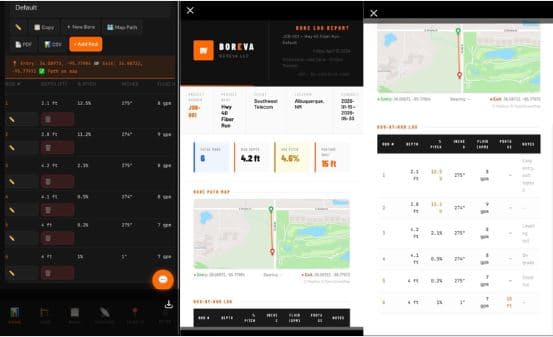
    Start here if you need the full breakdown: Directional Drilling Bore Log – What it is and Why it Protects Your Money

    Alot crews treat the bore log like paperwork.

    Something you fill out at the end of the day. Something you “get to when you get to it.” Something that doesn’t feel urgent because the drill is already in the ground and the footage is already drilled.

    That mindset is exactly why contractors lose money.

    A bore log is not a recap. It’s not a memory test. It’s not a summary of what you think happened.

    A bore log is the real‑time record of the job, the only written proof of what actually happened underground.

    And underground is where all the arguments happen.

    When a GC questions your footage… When an inspector asks why production slowed… When a utility claims you hit something you didn’t… When billing gets challenged…

    Your bore log becomes the only thing standing between you and a dispute you can’t win.

    If you fill it out at the end of the day, you’re not logging, you’re guessing. And guessing is expensive.

    This guide shows you exactly how to fill out a bore log the right way, step by step, shot by shot, in a way that protects your work, your production, and your money.

    What You Are Actually Doing When You Fill Out a Bore Log

    Crews think they’re “writing things down.”

    They’re not.

    When you fill out a bore log, you are creating legal, defensible, time‑stamped proof of what happened underground, the part of the job nobody can see, nobody can verify, and everybody argues about later.

    A bore log is not a diary. It’s not a worksheet. It’s not a checklist.

    It is evidence.

    Every number you write… Every depth you record… Every condition you note… Every problem you document…

    All of it becomes part of the story you may have to defend in front of:

    • A GC
    • An inspector
    • A city official
    • A utility owner
    • A project manager
    • Or your own boss

    And here’s the part most crews never think about:

    If it’s not written down, it never happened.

    Not in the eyes of the GC. Not in the eyes of the inspector. Not in the eyes of the city. Not in the eyes of your own company.

    Your memory doesn’t count. Your opinion doesn’t count. Your “I swear that’s what happened” doesn’t count.

    Only the log counts.

    That’s why accuracy matters more than speed. That’s why real‑time logging matters more than end‑of‑day summaries. That’s why consistency matters more than convenience.

    When you fill out a bore log, you are not just documenting the job, you are protecting the job.

    You are building the only written record that proves:

    • What you drilled
    • How you drilled it
    • What slowed you down
    • What conditions you faced
    • Why production changed
    • Why footage took longer
    • Why the bill is the bill

    A bore log is your shield.

    If you treat it like paperwork, you lose money. If you treat it like proof, you protect money.

    Step 1: Start Before the First Shot

    A bore log starts before the first shot, before the first rod, before the locator even turns the box on. If you wait until drilling begins, you’ve already lost the most important context the log needs.

    A bore log is not just a record of drilling, it’s a record of the job.

    And a job is more than footage.

    Before anything happens in the ground, you need to anchor the log to the real world. That means documenting the details that tie every shot, every foot, and every problem back to a specific crew on a specific day doing a specific job.

    This is the foundation. If you skip it, everything else floats.

    Here’s what must be logged before the first shot:

    • Job Name

    This connects the log to the contract. If a GC or inspector pulls your paperwork later, this is the first thing they look for.

    • Location

    Street, intersection, address, or stationing. If you can’t prove where the work happened, the rest of the log loses credibility.

    • Date

    Simple, but critical. Production, weather, delays, and billing all tie back to the date.

    • Crew Members

    Who drilled it. Who located it. Who mixed mud. Who was responsible for what.

    If something goes wrong, this is the first question asked: “Who was on the crew that day?”

    • Equipment Being Used

    Drill model, locator model, tooling, reamers, rods, anything that affects production.

    Why? Because equipment explains performance.

    A 20,000‑lb drill doesn’t produce like a 40,000‑lb drill. A worn bit doesn’t cut like a new one. A mismatched reamer slows everything down.

    When you document equipment up front, you create a baseline for the entire day.

    This first step is simple, but it’s the one that separates amateurs from professionals.

    Pros don’t start drilling until the log is already alive. Amateurs start drilling and try to remember everything later.

    Step 2: Log Every Bore Shot Immediately

    This is the part of the bore log that separates disciplined crews from sloppy ones.

    Every bore shot is its own event. Its own decision. Its own risk. Its own cost.

    And because of that, every shot deserves its own entry, clean, separate, and logged the moment it happens.

    Too many crews don’t do this. They drill three, four, five shots… then try to remember them later. That’s how details get blurred. That’s how numbers get rounded. That’s how production gets misrepresented. That’s how disputes start.

    Real‑time logging eliminates all of that.

    Here’s what must be logged immediately after each shot:

    • Shot Number

    This is the anchor. It keeps the entire log organized and prevents confusion when reviewing the job later.

    • Entry Point

    Where the drill head started. This matters for mapping, for inspectors, and for proving you followed the plan.

    • Exit Point

    Where the shot ended. If the exit point changes, even slightly, it affects footage, path, and production.

    • Planned Length

    This is the expectation. It’s what the GC, PM, or engineer believes the shot should be.

    When you compare planned length to actual length, you reveal:

    • Steering adjustments
    • Utility avoidance
    • Path corrections
    • Ground condition changes
    • Real‑world deviations from the print

    This is the story behind the footage.

    Why You Log Immediately

    Because memory is unreliable.

    After a few shots, everything blends together:

    • “Was that the one where we hit clay?”
    • “Did we adjust depth on that shot or the next one?”
    • “Was that the 180‑footer or the 220‑footer?”

    When you log in real time:

    • You capture the truth
    • You eliminate guesswork
    • You protect your production
    • You create a clean, defensible record

    A bore log filled out later is a story. A bore log filled out immediately is evidence.

    Step 3: Record Actual Bore Length

    If there is one number on the bore log that gets crews in trouble more than anything else, it’s this one.

    Actual footage.

    Not planned footage. Not estimated footage. Not “close enough” footage. Not “we’ll round it later” footage.

    Actual, measured, real‑world footage.

    This is the number that turns into billing. This is the number that gets audited. This is the number inspectors check. This is the number GCs challenge. This is the number that determines whether you made money or lost it.

    And because of that, it must be exact.

    Where Crews Go Wrong

    They round. They guess. They assume. They copy the planned length. They write what “feels right.” They fill it in at the end of the day when everything blends together.

    But here’s the truth:

    Every time you round, you lose accuracy. Every time you guess, you lose credibility. Every time you estimate, you lose money.

    A 10‑foot mistake doesn’t seem like much… until you multiply it across 20 shots. Or across a 3‑week job. Or across a year.

    Small errors stack into big losses.

    How to Log Actual Bore Length Correctly

    Right after each shot:

    1. Measure the actual rod count or footage drilled
    2. Confirm it with the locator
    3. Write it down immediately
    4. Double‑check before moving to the next shot

    This takes seconds, but it protects thousands of dollars.

    Why Actual Footage Matters

    Because actual footage tells the real story:

    • Did the crew stay on path?
    • Did they have to steer around something?
    • Did the shot run long because of utilities?
    • Did the ground conditions force adjustments?
    • Did the print match reality?

    Planned length is theory. Actual length is truth.

    And the bore log is supposed to record truth.

    Step 4: Track Depth and Path Conditions

    Depth and ground conditions are the silent killers of production. They’re the invisible forces that determine whether a shot goes smooth, slows down, or turns into a fight.

    Most crews don’t log this well. Some skip it entirely. And then they wonder why their production numbers don’t make sense later.

    Depth and conditions explain everything.

    They explain why a 200‑foot shot drilled in 45 minutes yesterday takes 90 minutes today. They explain why mud pressure changed. They explain why steering got tight. They explain why the drill started working harder. They explain why the locator had to adjust path.

    If you don’t track depth and conditions, your bore log becomes a list of numbers with no story and numbers without a story get questioned.

    What You Must Log for Every Shot

    • Average Depth

    This shows whether you stayed on plan or had to adjust. Depth affects steering, pressure, and production, it’s one of the first things inspectors look at.

    • Changes in Depth

    Did you drop? Did you climb? Did you hold steady?

    A sudden depth change often signals:

    • Utilities
    • Rock
    • Soft pockets
    • Steering corrections
    • Print deviations

    These changes matter because they explain why the shot didn’t go exactly as planned.

    • Ground Type

    Clay drills differently than sand. Sand drills differently than rock. Mixed ground drills differently than all of them.

    Log what you’re actually drilling through:

    • Clay
    • Sand
    • Rock
    • Mixed
    • Wet
    • Dry

    This is the context behind production. It’s the reason two identical shots can have completely different drilling times.

    • Wet or Dry Conditions

    Moisture changes everything:

    • Steering
    • Pressure
    • Tool wear
    • Mud performance
    • Production rate

    A wet day and a dry day are not the same job, your log needs to show that.

    Why This Section Matters More Than Crews Realize

    When a GC or PM asks:

    • “Why did production slow down?”
    • “Why did this shot take longer?”
    • “Why is the footage different from the print?”
    • “Why did the mud usage spike?”
    • “Why did the drill pressure increase?”

    Depth and conditions are the answer.

    Without this information, you look unprepared. With it, you look professional.

    This is the difference between:

    “I don’t know, that’s just how it went.” and “We hit mixed ground at 140 ft and had to adjust depth to avoid utilities, here’s the log.”

    One gets questioned. One gets respected.

    Capture Time and Production

    Footage tells you what happened. Time tells you why it happened.

    Without time, your bore log is just a list of distances. With time, it becomes a production record, something you can defend, explain, and bill from.

    Time is the connector. It ties the entire job together.

    And yet, it’s one of the most commonly skipped or sloppily recorded parts of the bore log.

    Most crews don’t track time because they think it’s “extra.” But time is not extra, it’s essential.

    Why Time Matters

    Time reveals:

    • Production rate
    • Slowdowns
    • Delays
    • Efficiency
    • Ground impact
    • Equipment performance
    • Crew performance
    • Billing justification

    If someone asks:

    • “Why did this shot take longer?”
    • “Why did production drop in the afternoon?”
    • “Why did mud usage spike?”
    • “Why did the drill pressure increase?”

    Time is the answer.

    Without time, you can’t explain anything. With time, you can explain everything.

    What You Must Log for Every Shot

    • Start Time

    The moment drilling begins. This is your baseline.

    • End Time

    The moment the shot is completed. This is your finish line.

    • Total Time Per Shot

    This is where the story lives.

    Two shots with identical footage can have completely different drilling times and that difference is what inspectors, GCs, and PMs care about.

    Time shows:

    • When the ground changed
    • When steering got tight
    • When mud thickened
    • When the drill started working harder
    • When the locator had to adjust path
    • When utilities slowed progress
    • When weather affected production

    Time is the truth behind the footage.

    How Time Protects You

    When billing gets challenged, you can say:

    “We drilled 180 feet in 1 hour 42 minutes because we hit mixed ground at 120 feet, here’s the log.”

    That is a defensible statement. It’s factual. It’s documented. It’s undeniable.

    Without time, all you can say is:

    “It took longer.”

    And that answer gets crews steamrolled.

    Step 6: Document Problems Immediately

    This is the section that makes or breaks the entire bore log.

    Not the footage. Not the depth. Not the time.

    The problems.

    Because problems are where the money is. Problems are where delays come from. Problems are where disputes start. Problems are where production gets questioned. Problems are where contractors get burned.

    And here’s the truth most crews don’t want to admit:

    If you don’t log the problem when it happens, it doesn’t exist later.

    Not to the GC. Not to the inspector. Not to the city. Not to your own office.

    If it’s not written down, it’s gone.

    Why Problems Must Be Logged Immediately

    Because details evaporate.

    Five minutes after a problem, you remember everything. Five hours later, you remember half. At the end of the day, you remember the big stuff. Tomorrow, you remember almost nothing. Next week, you remember whatever makes you look the best.

    That’s not logging, that’s storytelling.

    Real‑time documentation is the only way to capture the truth.

    What You Must Log the Moment It Happens

    • Utility Conflicts

    The #1 cause of delays and disputes. If you had to steer around something, slow down, or adjust depth, write it down.

    • Equipment Breakdowns

    Even small breakdowns matter. A 10‑minute fix repeated three times becomes half an hour of lost production.

    • Steering Issues

    If the head stopped responding, pulled left, pulled right, or fought the locator, log it.

    • Mud Problems

    Thick mud, thin mud, lost returns, pressure spikes, these explain production changes instantly.

    • Weather Delays

    Rain, lightning, cold, heat, anything that slows the crew or affects the ground.

    These aren’t excuses. They’re explanations. And explanations protect you.

    Why This Section Protects Your Money

    When billing gets challenged, the GC will say:

    “Why did production slow down here?”

    If your log says nothing, you lose. If your log says “steering issues due to rock at 120 ft,” you win.

    When an inspector asks:

    “Why did you deviate from the print?”

    If your log says nothing, you lose. If your log says “utility conflict at 80 ft required path adjustment,” you win.

    When your own office asks:

    “Why did this job take longer than expected?”

    If your log says nothing, you look sloppy. If your log shows documented problems, you look professional.

    Step 7: Add Notes That Explain the Story

    Numbers tell you what happened. Notes tell you why it happened.

    A bore log without notes is like a map without labels, you can see the path, but you have no idea what anything means.

    This is where most crews fall short. They think the footage, depth, and time are enough. They think the numbers speak for themselves. They think “everyone knows what happened.”

    But here’s the truth:

    Numbers without context get questioned. Numbers with context get respected.

    Notes are the bridge between the raw data and the real story of the job.

    Why Notes Matter

    Notes turn your bore log into a narrative, a clear, defensible explanation of the day.

    They answer the questions you will get asked:

    • Why did production slow down?
    • Why did the shot run long?
    • Why did you adjust depth?
    • Why did the path change?
    • Why did mud usage spike?
    • Why did the locator make a correction?

    Without notes, you’re left explaining everything verbally later and verbal explanations don’t hold up.

    With notes, the log speaks for itself.

    What Good Notes Look Like

    Good notes are:

    • Short
    • Clear
    • Factual
    • Written in real time
    • Focused on what changed or mattered

    You’re not writing a paragraph. You’re capturing the key moment.

    Examples of strong notes:

    • “Hit rock at 120 ft, slowed drilling pace.”
    • “Locator adjusted path due to existing utility.”
    • “Mud returns dropped at 90 ft, thickened mix.”
    • “Steering pulled right, corrected depth by 1.5 ft.”
    • “Weather delay — heavy rain for 20 minutes.”
    • “Drill pressure increased in clay pocket.”

    These notes do three things:

    1. Explain the numbers
    2. Protect the crew
    3. Strengthen billing

    What Bad Notes Look Like

    • “Hard ground.”
    • “Slow shot.”
    • “Had issues.”
    • “Adjusted path.”
    • “Equipment problem.”

    These notes say nothing. They don’t explain. They don’t defend. They don’t help you later.

    Bad notes create doubt. Good notes create clarity.

    Why Notes Protect You Later

    When someone challenges your production, you can point to the log and say:

    “We slowed down because we hit rock at 120 ft, it’s documented.”

    When someone questions your footage, you can say:

    “We adjusted path due to a utility conflict, here’s the note.”

    When someone asks why the job took longer, you can say:

    “Weather delay at 2:40 PM, logged in real time.”

    Notes turn arguments into facts. Facts win every time.

    Step 8: Stay Consistent Every Day

    A single good bore log doesn’t protect you. A single detailed day doesn’t prove anything. A single clean entry doesn’t build credibility.

    Consistency does.

    Consistency is what turns your bore log from “paperwork” into a reliable, defensible, professional record of the job. It’s what separates disciplined crews from chaotic ones. It’s what makes your logs believable, not just to you, but to anyone who reads them later.

    Most crews don’t lose money because they drill poorly. They lose money because their documentation is inconsistent.

    One day they log everything. The next day they log half. The next day they forget. The next day they round numbers. The next day they skip conditions. The next day they fill it out at the end of the shift.

    That inconsistency creates doubt. And doubt is the enemy.

    Why Consistency Matters

    When your bore log is consistent:

    • Every shot is documented the same way
    • Every day looks like the day before
    • Every number has context
    • Every problem has notes
    • Every deviation has an explanation
    • Every entry follows the same structure

    This creates a pattern and patterns build trust.

    When a GC, inspector, PM, or auditor looks at your logs, they’re not just looking at the numbers. They’re looking at the crew behind the numbers.

    A consistent log says:

    • This crew is disciplined
    • This crew pays attention
    • This crew documents in real time
    • This crew can be trusted
    • This crew’s numbers are reliable

    An inconsistent log says the opposite.

    What Consistency Looks Like in the Field

    • Same format every day

    Don’t reinvent the wheel. Use the same structure, same order, same fields, same flow.

    • Same level of detail

    Don’t go deep one day and shallow the next. If you log conditions today, log them tomorrow.

    • Same timing

    Real‑time logging must be real‑time every day, not just when things go wrong.

    • Same accuracy

    No rounding today and measuring tomorrow. No guessing one day and recording precisely the next.

    • Same discipline

    Every shot. Every time. Every day.

    Why Inconsistency Hurts You

    Inconsistency creates openings for doubt:

    • “Why is this day detailed and this day isn’t?”
    • “Why did they log conditions here but not here?”
    • “Why did they round footage on this shot?”
    • “Why did they skip notes on this day?”
    • “Why did they stop tracking time halfway through the job?”

    Doubt weakens your position. Doubt weakens your billing. Doubt weakens your credibility.

    What a Completed Bore Log Should Look Like

    At the end of the day, a completed bore log should read like a clean, chronological story of the job, not a puzzle, not a guessing game, not a collection of half‑filled boxes.

    A good bore log is simple: Anyone should be able to pick it up and understand exactly what happened without asking a single question.

    That’s the standard.

    If your PM, GC, inspector, or even another crew member can read your log and instantly see the full picture, you’ve done it right. If they have to ask you what happened, something is missing.

    Here’s what a complete, professional bore log includes every single day:

    • Every Shot Completed

    No combining. No skipping. No “we’ll fill that one in later.”

    Every shot stands alone with:

    • Shot number
    • Entry point
    • Exit point
    • Planned length

    This creates structure and prevents confusion.

    • Exact Footage Drilled

    Not rounded. Not estimated. Not “close enough.”

    Actual measured footage for each shot.

    This is the number that affects billing, production, and disputes — it must be precise.

    • Conditions Encountered

    This is the context behind the footage.

    Your log should clearly show:

    • Ground type
    • Depth changes
    • Wet/dry conditions
    • Any unusual drilling behavior

    This explains why production changed from shot to shot.

    • Time Spent

    Start time. End time. Total time.

    This is what turns your footage into a production rate and production rate is what gets questioned the most.

    Time is the backbone of your explanation.

    • Problems Documented

    This is where most crews fall short, and it’s the part that protects you the most.

    Your log should show:

    • Utility conflicts
    • Steering issues
    • Equipment breakdowns
    • Mud problems
    • Weather delays

    If it slowed you down, it belongs in the log.

    • Notes That Tell the Story

    Short, clear explanations that connect the dots:

    • “Hit rock at 120 ft, slowed drilling pace.”
    • “Adjusted path due to existing utility.”
    • “Lost returns at 90 ft, thickened mud.”

    These notes turn raw data into a defensible narrative.

    What a Good Bore Log Feels Like

    When you look at a completed bore log, it should feel:

    • Clean
    • Organized
    • Consistent
    • Detailed
    • Easy to follow
    • Impossible to argue with

    A good bore log doesn’t need you standing next to it explaining anything. It explains itself.

    That’s the goal.

    Where Most Crews Get It Wrong

    If you’ve been in this industry long enough, you already know the truth:

    Most crews don’t fail because they can’t drill. They fail because they can’t document.

    The mistakes are predictable. They happen on almost every job. And they cost contractors money every single day.

    Not because the crew is lazy. Not because they don’t care. But because nobody ever taught them how to log correctly and the industry treats bore logs like an afterthought instead of a financial tool.

    Here are the four biggest mistakes crews make, and why each one hurts more than they realize.

    1. They Log at the End of the Day

    This is the #1 mistake.

    When you log at the end of the day, you’re not recording, you’re reconstructing. You’re trying to remember:

    • Which shot hit clay
    • Which shot slowed down
    • Which shot needed a path correction
    • Which shot had steering issues
    • Which shot ran long
    • Which shot had mud problems

    Memory blends everything together.

    By the time you’re filling out the log, you’re guessing. And guessing is how you lose disputes, lose credibility, and lose money.

    2. They Round Footage

    Rounding is the silent killer of accuracy.

    Crews round because:

    • It’s faster
    • It “looks cleaner”
    • They think it doesn’t matter
    • They assume the GC won’t notice
    • They’re trying to finish paperwork quickly

    But here’s the reality:

    Every rounded number is a small lie. And small lies add up.

    A few feet here, a few feet there, multiplied across dozens of shots, becomes real money.

    When billing gets challenged, rounded numbers fall apart instantly.

    3. They Skip Conditions

    This is the mistake that destroys production explanations.

    If your log doesn’t show:

    • Rock
    • Clay
    • Sand
    • Mixed ground
    • Wet conditions
    • Depth changes

    …then your production numbers look random.

    You drilled 200 feet in 45 minutes yesterday. Today it took 90 minutes.

    Without conditions, it looks like the crew slowed down. With conditions, it looks like the ground changed.

    One gets questioned. One gets respected.

    4. They Forget Problems

    This is the most expensive mistake.

    If you don’t log problems when they happen, they disappear.

    And when they disappear, so does your justification for:

    • Delays
    • Extra time
    • Extra footage
    • Path changes
    • Production drops
    • Billing adjustments

    You can’t defend a problem that isn’t written down.

    And when the GC says:

    “I don’t see anything in the log about that.”

    …you’re done.

    Why These Mistakes Matter

    Because every one of them shows up later:

    • In billing
    • In inspections
    • In disputes
    • In audits
    • In production reviews
    • In conversations with the GC
    • In conversations with your own office

    A sloppy bore log makes you look sloppy. A clean bore log makes you look professional.

    This is exactly why the Boreva approach exists, to force real‑time tracking instead of memory‑based logging.

    It removes the guesswork. It removes the excuses. It removes the gaps.

    And it protects the contractor every single day.

    Crew Takeaway

    At the end of the day, a bore log isn’t about paperwork. It isn’t about forms. It isn’t about checking boxes.

    A bore log is about protecting the crew.

    It protects your work. It protects your production. It protects your time. It protects your decisions. It protects your paycheck. It protects your reputation.

    Most crews think the bore log is something the office needs. But the truth is simple:

    The bore log protects the people in the field.

    Because when something goes wrong, when a GC questions your footage, when an inspector challenges your path, when a PM asks why production slowed, when the city wants proof of depth, when billing gets audited……the only thing that stands between you and the argument is the log you filled out.

    Not your memory. Not your opinion. Not your explanation. Not your “I swear that’s what happened.”

    Just the log.

    If you want to keep the operators who actually fill out the logs correctly, read: How to retain Your Best Operator When Everyone Else is Trying to Hire Them.

    What the Crew Should Remember

    1. Log in real time

    Not later. Not at lunch. Not at the end of the day. Real time is the only time accuracy exists.

    2. Be exact, not approximate

    No rounding. No guessing. No “close enough.” Precision protects you.

    3. Document every shot

    Every shot is its own event. Every event needs its own entry.

    4. Record conditions and problems

    If it slowed you down, changed your path, or cost you time — write it down.

    5. Add notes that explain the story

    Short, clear, factual. Notes turn numbers into truth.

    6. Stay consistent

    A bore log is only as strong as its weakest day.

    This Matters for the Crew

    Because when the job is over and the questions start flying, the bore log becomes your voice.

    A clean, consistent, real‑time bore log says:

    • “We did the job right.”
    • “We documented everything.”
    • “We followed the plan.”
    • “We adjusted when needed.”
    • “We can prove every decision we made.”

    That’s how you earn respect. That’s how you avoid blame. That’s how you protect your work. That’s how you protect your crew.

    A bore log isn’t paperwork. It’s insurance. And the crew benefits from it more than anyone.

    Contractor Takeaway

    If the crew takeaway is about protecting the people in the field, the contractor takeaway is about protecting the business.

    Because here’s the truth:

    A bore log is not paperwork — it’s a financial document.

    It’s the record that determines:

    • What you can bill
    • What gets approved
    • What gets denied
    • What gets disputed
    • What gets escalated
    • What gets audited
    • What gets paid

    A sloppy bore log costs money. A clean bore log protects money.

    And contractors who understand this treat the bore log as seriously as they treat payroll, invoicing, and safety documentation.

    What Contractors Need to Understand

    1. The Bore Log Is Your Proof

    When a GC challenges your footage, your time, or your production, the bore log is the only thing that stands between you and a denied invoice.

    If it’s not documented, it didn’t happen. If it’s not clear, it gets questioned. If it’s inconsistent, it gets doubted.

    A clean bore log is your evidence. A sloppy bore log is a liability.

    2. The Bore Log Protects Your Margins

    Directional drilling is a margin‑sensitive business.

    Fuel, mud, tooling, labor, equipment wear, everything costs money.

    If your bore log doesn’t capture:

    • Delays
    • Ground changes
    • Utility conflicts
    • Steering issues
    • Weather impacts
    • Production slowdowns

    …then you eat those costs.

    A good bore log doesn’t just record the job, it protects the profitability of the job.

    3. The Bore Log Protects You in Disputes

    Every contractor eventually faces:

    • A GC who claims your footage is wrong
    • An inspector who questions your depth
    • A PM who challenges your production
    • A city who wants proof of path
    • An auditor who wants documentation

    When that happens, you don’t want opinions. You don’t want memories. You don’t want “I think we did…”

    You want a bore log that shuts the conversation down.

    A bore log that says:

    “Here’s the data. Here’s the time. Here are the conditions. Here are the notes. Here’s the story.”

    Disputes disappear when documentation is undeniable.

    4. The Bore Log Protects Your Reputation

    Contractors get judged on two things:

    • The quality of their work
    • The quality of their documentation

    You can drill perfectly, but if your paperwork is sloppy, you look sloppy.

    A clean bore log shows:

    • Professionalism
    • Discipline
    • Consistency
    • Accuracy
    • Accountability

    It tells the GC, the city, and your own PMs:

    “This contractor knows what they’re doing.”

    That reputation leads to more work, better relationships, and fewer headaches.

    5. The Bore Log Protects Your Future Jobs

    When you have a clean record of:

    • Ground conditions
    • Production rates
    • Delays
    • Problems
    • Path changes
    • Equipment performance

    …you can estimate future jobs with far more accuracy.

    Better estimates = better bids. Better bids = better margins. Better margins = a healthier company.

    The bore log isn’t just a record of the past, it’s a tool for the future.

    Final Thoughts

    A bore log is one of the simplest documents on a directional drilling job and one of the most powerful.

    It’s not complicated. It’s not technical. It’s not something that requires special training or certifications.

    But it does require discipline. It does require consistency. It does require accuracy. It does require real‑time attention.

    And that’s exactly why most crews struggle with it.

    Not because they can’t drill. Not because they don’t care. Not because they’re unskilled.

    But because the industry has treated bore logs like an afterthought for decades, a piece of paperwork instead of a financial safeguard.

    This article flips that mindset.

    It shows the crew how to protect themselves. It shows the contractor how to protect the business. It shows the GC and PM how to trust the documentation. It shows the inspector how to verify the work. It shows the auditor how to confirm the numbers.

    A clean bore log is more than a record. It’s a shield. It’s a story. It’s a defense. It’s a tool. It’s a competitive advantage.

    And when you fill it out correctly, consistently, accurately, and in real time — it becomes one of the most valuable documents on the entire job.

    The Bottom Line

    If you want to protect:

    • Your production
    • Your billing
    • Your reputation
    • Your margins
    • Your crew
    • Your company

    …then you must treat the bore log like the critical document it is.

    Not paperwork. Not busywork. Not something you do later.

    A bore log is the truth of the job, written down.

    And truth is what protects you.

    If you want to tighten up your bidding and protect your margins, read: How to Know Your Number Before You Bid

  • Directional Drilling Bore Log: What It Is, How to Fill It Out, and Why It Protects Your Money

    Directional Drilling Bore Log: What It Is, How to Fill It Out, and Why It Protects Your Money

    Directional drilling bore log example used for HDD documentation

    If you’ve ever been on a directional drilling job where the numbers didn’t add up, you already know the truth: the argument never starts in the field. It starts later, in an office, on a phone call, or across a conference table, when someone pulls out the contract and asks you to justify what happened.

    And in that moment, one document decides whether you get paid fairly or get squeezed:

    Your directional drilling bore log.

    Most crews don’t realize how much power this one sheet of paper holds. They see it as busywork. Something to fill out at the end of the day. Something that “doesn’t matter” because everyone saw what happened.

    But here’s the reality:

    • Memory fades
    • Opinions differ
    • Plans are wrong
    • Inspectors change
    • GCs forget what they agreed to
    • And when money is on the line, everyone suddenly remembers things differently

    A bore log cuts through all of that.

    It is the official recordof what happened underground, the part of the job nobody can see, nobody can measure after the fact, and nobody can verify without documentation.

    If it’s not in the bore log, it’s almost impossible to prove later.

    That’s why this article exists. To show you:

    • What a directional drilling bore log actually is
    • What belongs in it
    • How to fill it out correctly
    • The mistakes that cost contractors money
    • How inspectors use it
    • Why it protects you during disputes
    • And how digital bore logs are changing the industry

    By the end, you’ll understand exactly why the bore log is one of the most valuable tools on any HDD job and how to use it to protect your production, your schedule, and your profit.

    What Is a Directional Drilling Bore Log?

    If you ask ten different people on a jobsite what a bore log is, you’ll get ten different answers. Some will say it’s a daily report. Some will say it’s a production sheet. Others will shrug and call it “that thing the foreman fills out.”

    But here’s the real definition, the one that actually matters when money, time, and accountability are on the line:

    A directional drilling bore log is the official, factual, defensible record of every bore shot completed on a job.

    It’s not a guess. It’s not a memory. It’s not a summary.

    It is the ground truth of what happened underground.

    This matters

    Directional drilling is unique because most of the work happens where nobody can see it. You can’t walk the trench. You can’t measure the cut. You can’t point to the rock you hit or the water table you punched through.

    The bore log becomes the only way to document:

    • How far you drilled
    • Where you drilled
    • What you installed
    • What conditions you encountered
    • How long it took
    • What slowed you down

    Without that record, you’re relying on opinions and opinions don’t hold up in meetings, disputes, or inspections.

    What a bore log actually tracks

    A proper HDD bore log includes the details that tell the full story of the shot:

    • Bore length — the exact footage drilled
    • Entry and exit points — where the shot started and where it surfaced
    • Depth — critical for compliance and conflict avoidance
    • Product installed — conduit, fiber, pipe, etc.
    • Ground conditions — dirt, clay, sand, rock, water
    • Time and production — when you started, when you finished, and how long it took

    These aren’t just numbers. They’re evidence.

    Why Bore Logs Matter

    If you’ve ever sat in a progress meeting where someone questioned your footage, your timeline, or your invoice, you already know how fast the conversation can turn against you. One minute everyone is nodding along, and the next minute someone says:

    “Hold on, how do we know this is accurate?”

    That’s the moment when the bore log becomes the most important document on the entire project.

    Most crews underestimate this. They think the bore log is something the office wants “for paperwork.” They think it’s a formality. They think it’s something you fill out at the end of the day because someone told you to.

    But here’s the truth:

    Every problem on a job eventually becomes a question. And every question eventually becomes a challenge.

    • “How much did you drill?”
    • “Why did this take longer than expected?”
    • “Why is this over budget?”
    • “Why didn’t you hit production numbers?”
    • “Why are you requesting a change order?”

    If you don’t have a bore log, you’re not answering those questions, you’re guessing. And guessing loses every time against someone holding a contract.

    The three ways a bore log protects you

    A bore log isn’t just a record. It’s a shield. It protects you in three critical ways:

    1. It proves footage.

    Footage is money. If you can’t prove how much you drilled, you’re leaving the door wide open for someone to dispute your invoice.

    A clean bore log removes the argument. It shows the exact footage drilled on every shot, every day.

    2. It explains conditions.

    Ground conditions are the biggest variable in directional drilling. Clay slows you down. Rock destroys production. Water changes everything.

    When the bore log documents these conditions, you can clearly show why production changed and why the schedule or budget needs to adjust.

    Without that documentation, it looks like you simply didn’t perform.

    3. It justifies changes.

    Plans are wrong all the time. Depths change. Utilities appear where they shouldn’t. The ground doesn’t match the geotech report.

    A bore log gives you the evidence you need to support:

    • Change orders
    • Additional billing
    • Extra time
    • Equipment adjustments
    • Crew extensions

    It’s not about arguing harder, it’s about proving your case.

    What Should Be Included in a Bore Log

    A lot of contractors think they’re keeping a bore log when they jot down a few numbers on a clipboard. But a real directional drilling bore log, the kind that protects you in meetings, disputes, and inspections, is far more detailed than most crews realize.

    Think of the bore log as the story of the shot. If someone wasn’t there, they should be able to read the log and understand exactly what happened, why it happened, and how it affected production.

    That means the log must include every detail that impacts time, money, or quality.

    Let’s break down what belongs in a complete, defensible HDD bore log.

    Basic Job Information

    This is the foundation. It identifies the job and ties the log to a specific date, crew, and location.

    Include:

    • Job name — the project identifier
    • Location — street, intersection, or GPS
    • Date — the day the shot was completed
    • Crew — who was on site

    This seems simple, but missing basic info is one of the top reasons logs get dismissed in disputes. If the log isn’t tied to a specific day and crew, it’s easy for someone to question its accuracy.

    Bore Details

    This is where you document the physical characteristics of the shot.

    Include:

    • Shot number — every bore should be numbered
    • Start and end points — where the drill entered and exited
    • Bore length — exact footage drilled
    • Depth — critical for compliance and conflict avoidance

    These details matter because they prove:

    • How far you drilled
    • Whether you followed the plan
    • Whether you avoided conflicts
    • Whether the shot was completed as designed

    If a GC or inspector challenges your footage or alignment, this section is your first line of defense.

    Production Information

    This is where you show how long the shot took and what was installed.

    Include:

    • Time started and finished — the actual production window
    • Total footage drilled — not rounded, not estimated
    • Product installed — conduit, fiber, pipe, etc.

    This section answers the questions that always come up later:

    • “Why did this take longer than expected?”
    • “Why didn’t you hit production numbers?”
    • “Why is this day billed differently?”

    When your production data is clean, you can justify your schedule and your invoice without arguing.

    Ground Conditions

    Ground conditions are the biggest variable in directional drilling and the biggest justification for delays, slowdowns, and change orders.

    Document:

    • Dirt, rock, sand, clay
    • Wet or dry conditions
    • Any changes during the bore

    This is where most contractors lose money. If you don’t document the ground, you can’t prove:

    • Why production slowed
    • Why tooling wore out
    • Why the shot took longer
    • Why you need a change order

    A GC can argue with your opinion. They can’t argue with documented conditions.

    Issues and Delays

    This is the section that saves contractors thousands of dollars, if they fill it out honestly and consistently.

    Document:

    • Equipment problems — breakdowns, tooling failures, rod issues
    • Utility conflicts — mismarked lines, unexpected crossings
    • Weather delays — rain, mud, frozen ground

    This is the evidence you need when someone says:

    “You should have finished this shot yesterday.”

    If the log shows the delays as they happened, your case is airtight.

    Notes

    This is the catch‑all section and it’s more important than most crews realize.

    Write down anything that explains:

    • Why the job didn’t go as planned
    • Why production changed
    • Why the schedule shifted
    • Why the footage doesn’t match the estimate

    If it affects time, money, or quality, it belongs in the log.

    How to Fill Out a Directional Drilling Bore Log (The Right Way)

    If there’s one section in this entire article that can save a contractor the most money, it’s this one. Because the truth is simple:

    Most crews lose money because of how they document the drilling.

    A bore log is only as strong as the information you put into it. And the biggest mistake crews make is treating the log like something you fill out “when you get a minute”, usually at the end of the day, when the details are fuzzy, the pressure is off, and the memory is already fading.

    A bore log filled out at the end of the day is a bore log filled with guesses. And guesses don’t hold up in meetings, disputes, or inspections.

    Here’s how to fill out a bore log the right way, the way that protects your production, your schedule, and your money.

    Step 1: Log Every Bore Shot Immediately

    This is the golden rule.

    As soon as a shot is completed, the details go into the log:

    • Footage
    • Depth
    • Conditions
    • Time
    • Issues

    Not later. Not after lunch. Not at the end of the day.

    Right now.

    Why? Because memory changes under pressure. And when you’re drilling, you’re under pressure all day long.

    If you wait, you’ll forget:

    • The exact footage
    • The moment the ground changed
    • The delay that slowed you down
    • The utility you had to work around
    • The equipment issue that cost you 45 minutes

    Those details matter and they disappear fast.

    Step 2: Record Actual Footage, Not Estimated Footage

    This is another place where contractors lose money.

    Rounding is easy. Estimating is easy. Guessing is easy.

    But when someone challenges your invoice, “easy” becomes expensive.

    Actual footage is defensible. Estimated footage is not.

    If the log says 412 feet, it better be 412 feet, not “around 400.”

    Precision builds credibility. Credibility wins disputes.

    Step 3: Write Down Ground Conditions Honestly

    Ground conditions are the biggest justification for:

    • Slow production
    • Tooling changes
    • Schedule adjustments
    • Change orders
    • Additional billing

    But only if they’re documented.

    If you hit rock, write it down. If the ground turned wet, write it down. If you transitioned from clay to sand, write it down.

    These details explain the story of the shot.

    Without them, it looks like you simply didn’t perform.

    Step 4: Capture Problems as They Happen

    Every job has problems. That’s normal.

    What’s not normal is failing to document them.

    If you wait until later, the story gets weaker. If you write it down immediately, the story becomes undeniable.

    Document:

    • Equipment failures
    • Rod issues
    • Locator problems
    • Utility conflicts
    • Weather delays
    • Traffic or access issues

    These aren’t excuses, they’re facts. And facts protect you.

    Step 5: Be Consistent Every Single Day

    A bore log is only powerful if it’s complete.

    If you have:

    • Missing days
    • Missing shots
    • Missing details
    • Gaps in production
    • Inconsistent entries

    Then your entire log becomes questionable.

    And once someone doubts one part of your documentation, they start doubting all of it.

    Consistency builds trust. Trust builds leverage. Leverage protects your money.

    Common Bore Log Mistakes That Cost Contractors Money

    If you’ve ever looked at a job and thought, “We should’ve made more on this,” there’s a good chance the problem wasn’t the drilling, it was the documentation.

    Directional drilling is predictable. Paperwork is not. And the fastest way for a profitable job to turn into a financial headache is through a sloppy bore log.

    Most contractors don’t lose money because they drilled the wrong way. They lose money because they documented the right work the wrong way.

    Here are the most common bore log mistakes that show up later in billing, disputes, and inspections and how to avoid them.

    Mistake #1: Logging at the End of the Day

    This is the number one reason bore logs fall apart.

    When crews wait until the end of the day to fill out the log, they’re relying on:

    • Memory
    • Estimates
    • Assumptions
    • “Close enough” numbers

    But memory is unreliable, especially after a long day of drilling, troubleshooting, and dealing with jobsite chaos.

    What gets lost?

    • Exact footage
    • Depth changes
    • Ground transitions
    • Delays
    • Utility conflicts
    • Equipment issues

    These missing details become expensive later.

    Fix: Log each shot immediately. Not later. Not after lunch. Not at the end of the day.

    Mistake #2: Rounding Footage

    Rounding seems harmless, until someone challenges your invoice.

    If you drilled 412 feet and you write down “400,” you just gave away 12 feet of billable work.

    Now multiply that by:

    • 20 shots
    • 60 shots
    • 200 shots

    Suddenly you’re giving away thousands of dollars in production.

    And here’s the bigger issue:

    When you round once, people assume you rounded everywhere.

    Your entire log becomes questionable.

    Fix: Record exact footage. Precision builds credibility.

    Mistake #3: Skipping Ground Conditions

    Ground conditions are the #1 justification for:

    • Slow production
    • Tooling changes
    • Schedule adjustments
    • Change orders
    • Additional billing

    But if you don’t document the conditions, you can’t prove any of it.

    Skipping ground conditions is like drilling blind and billing blind.

    Fix: Document every condition change. Clay, sand, rock, water, write it down.

    Mistake #4: Leaving Out Problems

    Every job has problems. That’s normal.

    What’s not normal is failing to document them.

    If you don’t write down:

    • Equipment failures
    • Locator issues
    • Rod problems
    • Utility conflicts
    • Weather delays
    • Access issues

    Then none of those things “happened” when someone reviews the job later.

    And if they didn’t “happen,” you can’t bill for them.

    Fix: Document problems as they happen. Not later. Not tomorrow. Now.

    Mistake #5: Treating the Bore Log Like Paperwork

    This is the mindset that costs contractors the most money.

    When crews think the bore log is “just paperwork,” they:

    • Rush it
    • Skip details
    • Fill it out inconsistently
    • Leave out important notes
    • Treat it like a chore instead of a tool

    But the bore log isn’t paperwork. It’s protection.

    It’s the document that decides whether you get paid fairly or get squeezed.

    Fix: Treat the bore log like a legal document.

    Bore Logs and Billing Disputes

    If you’ve been in directional drilling long enough, you know this part of the job isn’t about drilling, it’s about proving what you drilled. And nothing brings that reality into focus faster than a billing dispute.

    Billing disputes don’t start with anger. They start with doubt.

    A GC, inspector, or project manager looks at your invoice and thinks:

    • “This seems high.”
    • “This took longer than expected.”
    • “This doesn’t match the estimate.”
    • “Why is this day billed differently?”

    And once doubt enters the conversation, everything becomes a question.

    This is where the bore log becomes your strongest weapon, or your biggest weakness.

    Why Bore Logs Matter in Billing Disputes

    When someone challenges your invoice, they’re not asking for your opinion. They’re asking for proof.

    They want to see:

    • What you drilled
    • How far you drilled
    • How long it took
    • What conditions you hit
    • What slowed you down
    • Why the job didn’t match the plan

    If you can’t prove it, you can’t bill it.

    A clean, detailed bore log removes the argument before it starts.

    What a Strong Bore Log Shows in a Dispute

    A defensible bore log makes your case for you. It shows:

    1. Exact Footage Drilled

    Not rounded. Not estimated. Not “close enough.”

    Exact footage is the foundation of your invoice. If you can prove the footage, you can prove the billing.

    2. Time Spent on Each Shot

    Billing disputes often come down to production expectations.

    If the GC thinks you should’ve drilled 600 feet that day but your log shows:

    • A utility conflict
    • A tooling failure
    • A ground condition change
    • A weather delay

    …then your timeline makes sense.

    Without that documentation, it looks like you simply didn’t perform.

    3. Conditions That Affected Production

    Ground conditions are the biggest justification for:

    • Slowdowns
    • Extra time
    • Additional billing
    • Change orders

    If your bore log shows:

    • Clay turning to rock
    • Dry ground turning to water
    • Sand pockets
    • Hard transitions

    …then your production numbers are justified.

    If you don’t document it, none of it “happened.”

    How the Conversation Changes With a Good Bore Log

    Without a bore log, the conversation sounds like this:

    “You said it took longer, but we don’t see why.” “You’re billing for extra time, but we don’t see the reason.” “You’re claiming rock, but we don’t see it documented.” “You’re asking for a change order, but we don’t see the justification.”

    You’re defending yourself. You’re explaining. You’re trying to convince them.

    That’s a losing position.

    With a clean bore log, the conversation sounds like this:

    “Here’s the footage.” “Here’s the timeline.” “Here are the conditions.” “Here are the delays.” “Here’s the documentation.”

    You’re not defending. You’re proving.

    And proof wins.

    Digital Bore Logs vs. Paper Bore Logs

    For decades, paper bore logs were the standard in directional drilling. Every crew had a clipboard. Every foreman had a stack of forms. Every truck dashboard had a pile of half‑filled sheets sliding around. And every contractor has lived through the same nightmare:

    A missing log. A damaged log. A coffee‑stained log. A log filled out three days late. A log nobody can read.

    Paper logs worked when jobs were smaller, expectations were lower, and documentation wasn’t as critical. But today’s HDD world is different:

    • More utilities
    • More conflicts
    • More inspectors
    • More documentation requirements
    • More billing scrutiny
    • More liability

    Paper logs simply can’t keep up.

    That’s why digital bore logs are becoming the new standard, not because they’re “high‑tech,” but because they solve the problems that cost contractors money.

    Let’s break down the difference.

    The Problem With Paper Bore Logs

    Paper logs fail for the same reasons paper fails in every industry:

    1. They get lost or damaged

    Rain, mud, wind, coffee, sweat, paper doesn’t survive a jobsite.

    2. They get filled out late

    Most paper logs get completed at the end of the day, which means:

    • Details get forgotten
    • Footage gets rounded
    • Conditions get skipped
    • Problems get left out

    Late logs = weak logs.

    3. They’re hard to share

    If the PM, GC, or inspector needs the log, someone has to:

    • Take a picture
    • Text it
    • Email it
    • Scan it
    • Hope it’s readable

    This slows down approvals, billing, and dispute resolution.

    4. They’re inconsistent

    Different crews fill out logs differently. Different foremen track different details. Different days have different formats.

    Inconsistency kills credibility.

    Why Digital Bore Logs Are Taking Over

    Digital bore logs aren’t about technology, they’re about accuracy, speed, and protection.

    Here’s what they solve:

    1. Real‑Time Entry

    Crews can log:

    • Footage
    • Depth
    • Conditions
    • Delays
    • Notes

    …as the shot happens.

    No more end‑of‑day guessing.

    2. Automatic Tracking

    Digital logs can automatically:

    • Timestamp entries
    • Track production
    • Store shot numbers
    • Organize logs by job
    • Sync data to the office

    This eliminates human error and missing information.

    3. Instant Sharing

    PMs, clients, and inspectors can see logs immediately.

    This speeds up:

    • Approvals
    • Change orders
    • Billing
    • Dispute resolution

    No more waiting for someone to “send the paperwork.”

    4. Better Accuracy = Better Protection

    Digital logs create a clean, consistent, defensible record.

    When someone challenges your invoice, you have:

    • Exact timestamps
    • Exact footage
    • Exact conditions
    • Exact delays

    Not opinions. Not memories. Not guesses.

    Proof.

    Tools Like Boreva Are Built for HDD Crews

    Generic apps don’t work for directional drilling. You need something built for:

    • Bore shots
    • Depth tracking
    • Ground conditions
    • Production logs
    • Utility conflicts
    • Crew reporting

    That’s why tools like Boreva exist, to give HDD contractors a simple, field‑ready way to document the work that protects their money.

    The advantage isn’t the app. The advantage is the accuracy.

    Better data wins faster.

    How Inspectors Use Bore Logs

    If you’ve ever had an inspector walk up to your crew with a clipboard, a tablet, or a stack of plans, you already know the drill: they’re not there to guess. They’re there to verify.

    Inspectors have one job, to make sure the work in the ground matches the work on the plans. And because directional drilling happens where nobody can see it, the bore log becomes the inspector’s primary tool for confirming whether the job was done correctly.

    This is where a lot of contractors get blindsided. They think the bore log is for the office. They think it’s for billing. They think it’s for disputes.

    But inspectors rely on it just as much, sometimes more.

    Let’s break down exactly how inspectors use bore logs and why your documentation determines whether your job passes smoothly or gets flagged.

    Inspectors Aren’t Guessing, They’re Comparing

    When an inspector reviews your bore log, they’re comparing three things:

    1. The plans
    2. The field conditions
    3. Your documentation

    If all three align, the job moves forward. If they don’t, the questions start.

    Inspectors look for:

    • Footage accuracy
    • Entry and exit points
    • Depth compliance
    • Product installed
    • Ground conditions
    • Any deviations from the plan

    They’re not trying to catch you, they’re trying to confirm the work.

    But if your log is incomplete, inconsistent, or sloppy, it creates doubt. And doubt leads to delays, rework, or worse,failed inspections.

    What Inspectors Check First

    Most inspectors follow a predictable pattern when reviewing bore logs. They start with the basics:

    1. Footage

    Does the footage in the log match the footage in the field?

    If your log says 410 feet but the inspector measures 380, you’re in trouble.

    2. Depth

    Are you at the required depth?

    Too shallow = conflict risk. Too deep = unnecessary cost. Inconsistent depth = red flags.

    3. Entry and Exit Points

    Did you drill where the plans said you should?

    If your exit point is off by 10 feet, the inspector wants to know why.

    4. Product Installed

    Does the log match what’s in the ground?

    Wrong product = failed inspection.

    5. Conditions and Notes

    Did you document anything that explains deviations?

    If you hit rock, water, or a mismarked utility, the inspector expects to see it in the log.

    Why Inspectors Care About Documentation

    Inspectors aren’t just checking your work, they’re protecting:

    • The city
    • The utility owner
    • The public
    • The infrastructure
    • The long‑term integrity of the installation

    If your documentation is sloppy, it signals risk.

    A clean bore log tells the inspector:

    • You know what you’re doing
    • You’re paying attention
    • You’re following the plan
    • You’re documenting changes
    • You’re not hiding anything

    This builds trust — and trust makes inspections faster and easier.

    What Happens When Your Bore Log Doesn’t Match the Field

    This is where contractors get into trouble.

    If your bore log doesn’t match what the inspector sees, several things can happen:

    • You get flagged for rework
    • You get delayed
    • You get questioned
    • You get documented for non‑compliance
    • You lose credibility
    • You lose leverage in future disputes

    And once an inspector loses trust in your documentation, everything gets scrutinized.

    Every shot. Every depth. Every note. Every day.

    A sloppy bore log creates a long‑term problem.

    What Happens When Your Bore Log Is Clean and Accurate

    On the other hand, a clean bore log:

    • Speeds up inspections
    • Reduces questions
    • Builds credibility
    • Supports your billing
    • Protects your schedule
    • Makes change orders easier
    • Shows professionalism

    Inspectors remember contractors who document well. And they remember the ones who don’t.

    The Real Purpose of a Bore Log

    If you ask most crews why they fill out a bore log, you’ll hear the same answers:

    “The office needs it.” “Billing wants it.” “The PM asked for it.” “It’s part of the paperwork.”

    But none of those are the real reason a bore log exists.

    A bore log has one purpose and it’s not for the office, the PM, or the GC.

    A bore log exists for the moment someone challenges your work.

    And that moment always comes.

    It might be a small question: “Why did this shot take longer?”

    It might be a bigger one: “Why are you billing extra for this day?”

    Or it might be the kind of question that decides whether you get paid at all: “Why does your footage not match the estimate?”

    When that moment hits, the bore log becomes the most important document on the entire project.

    Not the plans. Not the emails. Not the conversations. Not the memories.

    The bore log.

    Because the bore log is the only document that shows what actually happened underground, the part of the job nobody can see, nobody can measure after the fact, and nobody can verify without documentation.

    Why the Bore Log Isn’t Really for You

    You already know what happened. Your crew knows what happened. Your locator knows what happened.

    But the people who make decisions about:

    • Billing
    • Change orders
    • Disputes
    • Approvals
    • Compliance
    • Closeout

    …weren’t there.

    They didn’t see the rock transition. They didn’t see the mismarked utility. They didn’t see the tooling failure. They didn’t see the water table. They didn’t see the delay.

    All they see is the log.

    If it’s documented, it happened. If it’s not documented, it didn’t.

    That’s the reality of construction.

    Why the Bore Log Is More Important Than Hard Work

    Contractors love to say, “We worked our asses off on that job.”

    And that’s true. But hard work doesn’t win disputes.

    Documentation does.

    The contractor who wins isn’t the one who worked the hardest. It’s the one who can prove what happened.

    A clean, consistent, detailed bore log turns your work into evidence.

    Evidence wins:

    • Disputes
    • Billing arguments
    • Change order requests
    • Inspector reviews
    • Closeout approvals
    • Schedule extensions

    Hard work gets the job done. Documentation gets you paid for it.

    Crew Takeaway

    At the end of the day, directional drilling is simple: put the product in the ground safely, accurately, and efficiently. But getting paid for that work, getting paid fairly, fully, and without a fight, depends on something far less glamorous:

    Your bore log.

    Crews don’t always see the connection. They’re focused on production, not paperwork. They’re thinking about the next shot, not the next meeting. They’re trying to finish the day, not defend the day.

    But here’s the truth every experienced contractor eventually learns:

    The bore log is the only part of the job that protects the work after the work is done.

    So here’s the takeaway every crew should understand, simple, clear, and non‑negotiable.

    A Bore Log Is Proof, Not Paperwork

    Paperwork is something you fill out because someone told you to. Proof is something you create because you know you’ll need it later.

    A bore log isn’t busywork. It’s the evidence that backs up your production, your timeline, and your invoice.

    If you treat it like paperwork, it won’t protect you. If you treat it like proof, it will.

    If It’s Not Written Down, It Didn’t Happen

    This is the rule that decides disputes.

    You might remember the rock transition. You might remember the tooling failure. You might remember the mismarked utility. You might remember the delay.

    But if it’s not in the log, nobody else has to believe you.

    Documentation beats memory every time.

    Every Missing Detail Turns Into Lost Money Later

    A missing depth. A missing note. A missing delay. A missing condition change. A missing shot.

    Every gap in the log becomes an opportunity for someone to challenge your work and challenge your pay.

    The details you skip today become the dollars you lose tomorrow.

    Fill It Out During the Work, Not After

    The fastest way to weaken a bore log is to fill it out at the end of the day.

    When you wait:

    • Details fade
    • Footage gets rounded
    • Conditions get forgotten
    • Problems get minimized
    • Timelines get blurred

    A bore log filled out later is a bore log filled with guesses.

    A bore log filled out during the work is a bore log filled with facts.

    Accuracy Beats Memory Every Time

    You don’t win disputes by arguing harder. You win by documenting better.

    Accuracy builds credibility. Credibility builds leverage. Leverage protects your money.

    The crew that documents well gets paid well. The crew that documents poorly gets questioned.

    It’s that simple.

  • How to Know Your Number Before You Bid

    How to Know Your Number Before You Bid

    Too many HDD contractors price jobs one of two ways.

    • They either use what they charged last time.
    • Or they use what they think the market will bear.

    Neither of those is your actual cost per foot.

    And if you don’t know your actual cost per foot; loaded with real labor, real equipment, real materials, and real production rates, then every bid you write is a guess with a dollar sign attached.

    Some guesses come in profitable. Some don’t. And you won’t know which is which until the job closes.

    That’s not a business. That’s a lottery.

    Here’s how to get off it.

    What “Cost Per Foot” Actually Means

    Cost per foot is the total dollars it costs your operation to drill one foot of bore, fully loaded. Not just the drill operator’s wage. Every dollar that touches the job divided by every foot that came out of it.

    The formula is simple:

    Total Job Cost ÷ Total Footage = Cost Per Foot

    The hard part isn’t the math. It’s knowing your total job cost with any accuracy. Most contractors undercount it because they’re only tracking the obvious stuff, labor and fuel, and ignoring the costs that eat them quietly: equipment depreciation, drill fluid, downtime hours, subcontractors, mobilization, and overhead allocation.

    The Four Cost Buckets You Have to Track

    1. Labor Cost

    This is the one everyone thinks they track. But do you know your fully-loaded labor cost, not just wage, but what each crew member actually costs your business per hour?

    That number includes the wage, yes. But it also includes payroll taxes, workers comp, and any benefits. For most crews that’s 25-35% on top of the base hourly rate.

    Article content

    2. Equipment Cost

    Your drill, your mix system, your locating equipment, your support trucks. Every piece of iron has a daily cost whether it’s running or sitting.

    The most honest way to calculate it: take your total annual equipment cost (payments, insurance, maintenance, fuel budget) and divide it by your annual working days. That’s your daily equipment cost. Divide by your average daily footage and you have your equipment cost per foot.

    Most contractors are surprised by this number.

    Article content

    3. Direct Job Costs

    Drill fluids. Conduit. Fittings. Bore head wear. Pull-back equipment rental. Permit fees. Traffic control. Any sub you brought in for vacuum excavation or concrete restoration.

    These are the line items that vary by job and rarely get fully captured on a cost-per-foot basis. They get absorbed into “the job” without being tied to the footage that required them.

    Article content

    4. Overhead Allocation

    This is the one almost nobody does and it’s the one that turns a “profitable” job into a break-even.

    Overhead is every cost your business carries that isn’t tied to a specific job. Office. Insurance. Truck payments on vehicles not assigned to jobs. Admin time. Software. Accounting. Your own salary if you’re drawing one.

    To allocate overhead to a job: take your monthly overhead total, divide by monthly revenue, and you get an overhead percentage. Add that percentage to every job’s total cost before you calculate your margin.

    A typical underground utility contractor carries 12-18% overhead. Ignoring it means you think a 20% margin job is profitable when the real margin is closer to 4%.

    The Production Rate Variable You’re Probably Ignoring

    Here’s where cost per foot gets complicated and where most bids go wrong.

    Your cost per foot is not a fixed number.

    It changes with soil conditions. It changes with bore diameter. It changes with depth. It changes with site access, traffic control requirements, and how far your crew has to travel.

    A 300-foot bore in sandy loam at 8 feet deep costs your operation a very different number per foot than a 300-foot bore in cobble at 18 feet deep.

    If you’re bidding both jobs at the same price per foot, one of them is making you money and one of them is costing you money. You just don’t know which.

    Article content

    How to Calculate Your Number From Real Data

    This is where Boreva does the work.

    After you’ve logged three or four jobs end to end, daily entries, equipment hours, cost tracker, bore logger, the data exists. Here’s how to pull it:

    Step 1: Pull the job P&L from the Financials page.

    Article content

    Step 2: Cross-reference against the bore footage from the Bore Logger.

    Article content

    Step 3: Do the math.

    If Job MN-3162 cost $47,200 to deliver and produced 2,800 feet of bore, your fully-loaded cost on that job was $16.86 per foot.

    Run that across five jobs. Look at the variance. The jobs with good soil conditions and efficient production will show a lower number. The jobs with conflicts, hard material, or equipment issues will show a higher one.

    That variance is your pricing intelligence.

    What to Do With the Number

    Once you know your range, say $14/ft on favorable conditions to $24/ft on difficult conditions, you can price jobs based on what the specific job looks like, not what you charged last time.

    A bore bid in sandy soil with clean locates, clear ROW, and 10-foot depth gets priced at the low end of your range plus margin.

    A bore bid in unknown soil, near a highway, with multiple utility crossings and tight staging gets priced at the high end of your range with extra contingency built in.

    That’s not guessing. That’s data-driven pricing.

    Article content

    The Crew Variable: Your Cost Per Foot Isn’t Just About the Job

    One more thing most contractors never look at.

    Your cost per foot varies by crew, not just by job conditions.

    A crew that produces 320 feet per day has a fundamentally different cost structure than a crew that produces 200 feet per day. Same labor cost, same equipment cost, same materials. But 60% more footage in the denominator means 60% lower cost per foot.

    Article content

    The Number You Should Know Cold

    After running Boreva for a full job cycle, 90 days, three to four jobs, you should be able to answer these without looking anything up:

    What is your average fully-loaded cost per foot in normal conditions?

    What is your average fully-loaded cost per foot in difficult conditions?

    What is your production rate per day per crew in each condition type?

    If you know those three numbers, you can price any job accurately in five minutes.

    If you don’t, you’re still guessing.

    And somewhere in that guess is the job that’s going to hurt.

    Start With One Job

    You don’t need six months of perfect data to get started.

    Pick the next job. Set up the price sheet before day one. Log daily entries to tasks every day. Log equipment hours every day. Log every expense in the cost tracker as it happens. Log the bore rod by rod.

    When the job closes, go to the Financials page. Pull the total cost. Pull the footage from the bore logger. Divide.

    That’s your first real number.

    It won’t be perfect. But it will be more accurate than anything you’ve been working with.

    And the job after that will be better. And the one after that.

    That’s how you build the kind of cost intelligence that stops you from guessing and starts getting you paid what the work is actually worth.